Behind the Curtain: The Technology Powering Flawless Premium Events
There is a particular kind of magic that defines a truly exceptional event — the kind where every transition feels natural, every detail arrives on cue, and guests move through the experience without ever sensing the immense coordination happening just out of sight. At Quality Event Design, we believe that this apparent effortlessness is not accidental. It is engineered, and increasingly, it is engineered through technology.
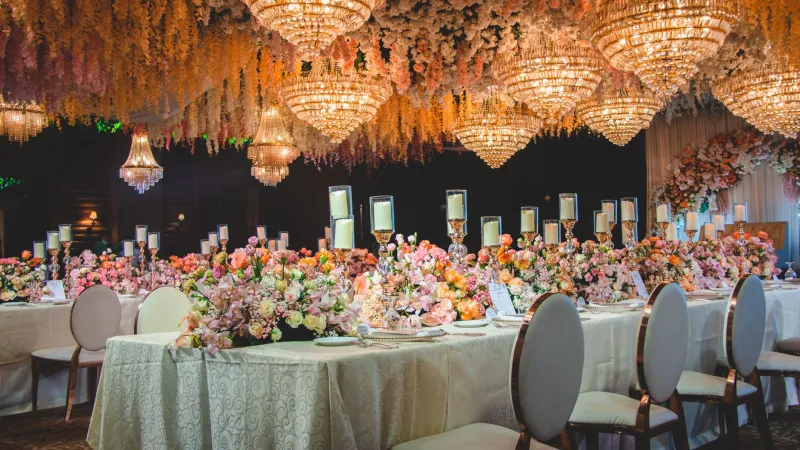
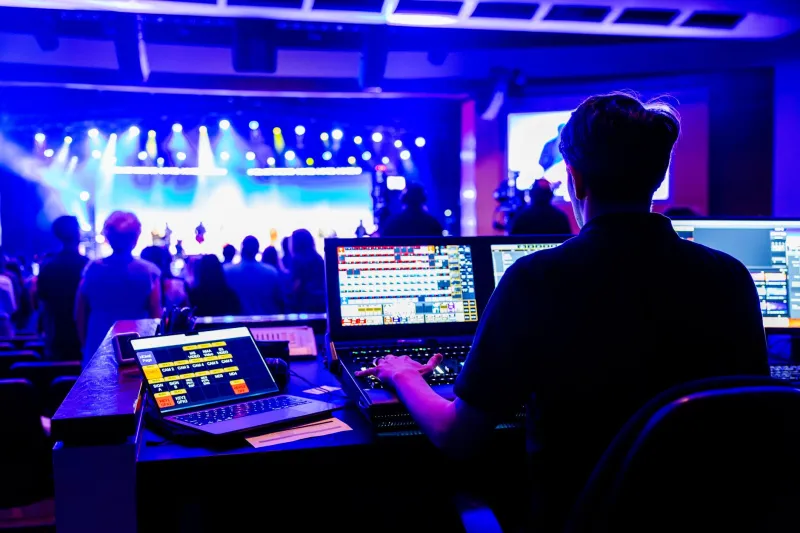
The event industry has undergone a quiet revolution over the past decade. While guests admire floral installations and custom lighting rigs, a parallel world of digital infrastructure operates in the background — one that determines whether a keynote speaker's microphone is live at the right moment, whether a catering team receives updated headcount figures in time, and whether a client's vision survives contact with reality. Understanding this infrastructure is essential to understanding what separates premium event production from the ordinary.
The Command Center: Event Management Platforms
At the foundation of every project we undertake is a centralized event management platform that consolidates the full scope of a production into a single, navigable environment. These platforms — purpose-built for the complexity of large-scale events — serve as the authoritative record for timelines, vendor contracts, budget allocations, floor plans, and guest data.
Rather than managing a production through fragmented spreadsheets and email chains, our team operates from a shared digital workspace where every stakeholder — from the florist to the audiovisual director — accesses the same current information. This eliminates the version-control problems that have quietly derailed countless events: the outdated run-of-show sent to a vendor, the dietary restriction that never made it to the kitchen, the room layout revision that one contractor never received.
For clients, this centralization translates directly into confidence. When a last-minute change is made — a guest list adjustment, a room configuration shift, a timeline compression — that change propagates immediately across the entire production ecosystem. Nothing falls through the cracks because there are no cracks to fall through.
Real-Time Communication: Keeping Every Team Member Synchronized
On the day of an event, the pace of decision-making accelerates dramatically. A vendor arrives thirty minutes late. A speaker requests an unscheduled break. A sudden weather shift forces a cocktail hour indoors. In these moments, the speed and clarity of internal communication determines whether a problem becomes a crisis or simply a footnote.
Quality Event Design equips every on-site team member with real-time communication tools that allow instantaneous coordination across departments. Rather than relying on walkie-talkies alone — which remain useful for certain logistical tasks — our teams use encrypted messaging platforms that support text, voice, and document sharing simultaneously. A floor manager can photograph an issue with a table arrangement and send it directly to the design lead with a single tap. A production coordinator can push a revised timeline to every department head the moment a schedule adjustment is confirmed.
This level of connectivity is not merely a convenience. At a corporate gala we produced for a financial services firm in New York, a critical AV component failed forty minutes before doors opened. Because our team was operating on a unified communication platform, the issue was identified, escalated, and resolved — with a replacement unit sourced from a nearby vendor — before the first guest arrived. The client never knew. That invisibility is the goal.
Production Tools: Translating Vision Into Spatial Reality
The gap between a creative concept and its physical realization is where many events quietly fall short. A design that looks compelling on a mood board may not translate effectively into a three-dimensional space. Lighting that appears warm and inviting in a rendering may feel cold and clinical under the actual ceiling height of a ballroom.
To close this gap, our design team employs three-dimensional event rendering software and virtual venue modeling tools that allow us to construct a precise digital replica of any space before a single piece of décor is ordered. Clients can walk through a photorealistic simulation of their event, experiencing the spatial relationships between elements — the sight lines, the flow of foot traffic, the interplay of ambient and accent lighting — before any commitment is made.
This capability has proven transformative in our work with clients who are coorduring multi-day conferences, where the same space must serve radically different functions across consecutive days. The ability to model each configuration digitally, stress-test transitions, and identify conflicts in advance has consistently shortened setup times and reduced the costly last-minute adjustments that inflate production budgets.
Guest Experience Technology: The Invisible Touchpoints
Beyond the operational infrastructure, technology shapes the guest experience in ways that are intentionally imperceptible. Digital check-in systems eliminate the bottleneck of paper registration, allowing guests to move from arrival to the event floor in under sixty seconds. RFID wristbands or QR-coded credentials enable personalized touchpoints — a welcome message displayed on a screen as a VIP guest enters, or a customized menu delivered automatically at a seated dinner.
At one product launch we produced for a consumer brand in Los Angeles, guests interacted with an augmented reality installation that responded to individual engagement patterns, creating a unique experience for each attendee. The technology was woven so seamlessly into the event's design narrative that most guests described it simply as "the coolest thing" — unaware of the months of technical planning required to make it feel spontaneous.
Why Technology Alone Is Never Enough
It would be a mistake, however, to suggest that technology is a substitute for expertise. The platforms and tools described above are only as effective as the professionals who deploy them. A sophisticated event management system operated by an inexperienced team will still produce a disorganized event. The technology amplifies the capacity of a skilled team — it does not replace the judgment, creativity, and interpersonal intelligence that premium event production demands.
At Quality Event Design, our approach treats technology as infrastructure, not identity. The tools we use are selected because they serve our clients' experiences — not because they generate impressive demonstrations. Every platform we adopt must earn its place by making our team more effective, our clients more confident, and our events more extraordinary.
The events that guests remember for years are not the ones where the technology was visible. They are the ones where everything simply worked — where the evening unfolded with the grace of something inevitable. Behind that grace is a disciplined, technology-supported process that we refine with every production we undertake.
When you partner with Quality Event Design, you are not simply hiring a creative team. You are engaging an operational architecture built to protect your vision and deliver it, without compromise, to the people who matter most.