When Scale Becomes Distance: Designing Personal Connection Into Large-Format Events
There is a quiet irony embedded in the architecture of large-scale events: the more guests you invite, the harder it becomes for any single guest to feel genuinely welcomed. A five-hundred-person gala, a thousand-seat conference, a sprawling outdoor festival—each carries the seeds of its own disconnection. Crowds generate energy, yes, but they also generate anonymity. And anonymity, left unaddressed, is the single greatest threat to meaningful event experiences.
Understanding the psychological forces at work—and countering them with deliberate design—is what separates a gathering from an experience worth remembering.
The Psychology of the Crowd
Human beings are wired for recognition. Behavioral researchers have long documented what is sometimes called the "cocktail party effect"—our brain's remarkable ability to isolate our own name from a wall of ambient noise. This same neurological sensitivity extends to physical environments. When a space fails to acknowledge us as individuals, the brain registers a subtle but persistent signal: you are interchangeable here.
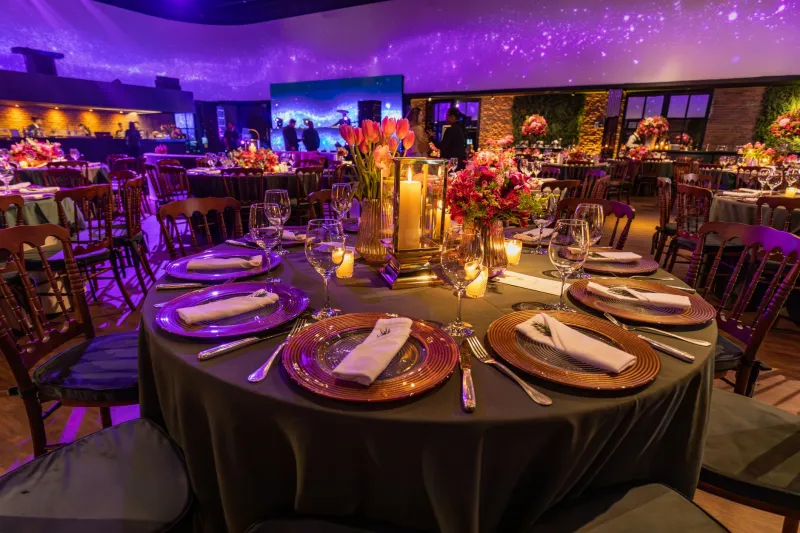
At large events, this signal compounds. Identical chairs arranged in uniform rows, generic signage, one-size-fits-all programming, and undifferentiated catering stations all communicate the same message at scale. Guests may not articulate the feeling consciously, but they carry it home. The event becomes a number they attended rather than an experience they inhabited.
This is the intimacy paradox in its sharpest form: the very investment required to produce a large event—the venue, the production budget, the catering contracts—can inadvertently manufacture the distance it was meant to overcome.
Redefining the Unit of Experience
The most effective corrective begins with a reframing. Rather than designing for five hundred guests, skilled event professionals design for one guest, five hundred times over.
This distinction is not merely philosophical. It has direct implications for spatial planning, programming sequencing, and guest journey mapping. When the individual becomes the design unit, questions shift. Instead of asking, "Where do guests go after the keynote?" the question becomes, "What does this particular guest—who traveled from Dallas, who manages a team of twenty, who registered for the breakout on sustainability—need to feel at this precise moment in the event?"
Answering that question at scale requires systems. But the systems must never reveal themselves to the guest. The machinery of personalization should be entirely invisible, leaving only its warmth behind.
Strategic Interventions That Close the Distance
Micro-Moment Architecture
One of the most underutilized tools in large-event design is the deliberate engineering of micro-moments—brief, individual interactions embedded within the broader program that make each guest feel specifically seen. These moments need not be elaborate. A handwritten welcome note waiting at an assigned seat. A registration ambassador who greets guests by first name and delivers a single relevant piece of information tailored to their agenda. A photo installation that incorporates each guest's submitted memory or image prior to arrival.
The cumulative effect of these small gestures is disproportionate to their production cost. Research consistently shows that emotional memory is shaped less by duration than by peak intensity and final impression. A thirty-second personalized moment, strategically placed, can define how a guest remembers an entire evening.
Spatial Fragmentation
Large venues are not inherently cold. They become cold when they are left undivided. Premium event designers routinely counteract the anonymizing effect of scale by breaking large spaces into a constellation of smaller, purposeful environments.
Lounge clusters with distinct identities, curated breakout zones anchored by specific themes or industries, intimate tasting stations positioned away from the main flow of traffic—each creates a sub-environment in which guests can settle, linger, and connect without competing against the visual and acoustic weight of the full room. The guest who spends twenty minutes in a quiet corner designed around their professional interests does not experience a five-hundred-person event. They experience an intimate conversation that happened to occur within one.
This technique, sometimes called environmental zoning, is particularly powerful when zones are differentiated not just aesthetically but functionally. A reflection space offers something a networking lounge does not. A hands-on activation offers something a panel session cannot. Variety in environmental purpose gives guests agency—and agency is one of the most reliable pathways to felt belonging.
Personalized Touchpoints Along the Guest Journey
The guest journey at a large event spans far more than the hours spent on-site. It begins with the invitation and extends through the follow-up communication that arrives days later. Personalization embedded at multiple points along this continuum reinforces the sense that the guest, specifically, was considered.
Practically, this might mean registration workflows that capture preference data and surface it meaningfully during the event itself. It might mean name-specific digital check-in experiences that pull relevant agenda recommendations based on prior selections. It might mean closing communications that reference the specific session a guest attended or the specific moment they were photographed.
None of this requires magic. It requires intention, coordination between technology and design teams, and a clear commitment to treating data not as an operational byproduct but as a hospitality asset.
The Role of Staff as Design Elements
In large-scale event environments, human beings are among the most powerful design tools available. A well-trained, strategically deployed team of event professionals can do what no lighting rig or floral installation can: make a guest feel recognized in real time.
This means investing in staff briefings that go beyond logistics. Staff should understand who the guests are, why they are there, and what specific needs different audience segments are likely to bring. A team member who can direct a first-time attendee to the right breakout with genuine warmth and specific knowledge transforms a moment of potential confusion into a moment of care. Multiplied across an event, these interactions become part of the experience's texture—subtle but cumulative in their effect.
Scale as an Asset, Not a Liability
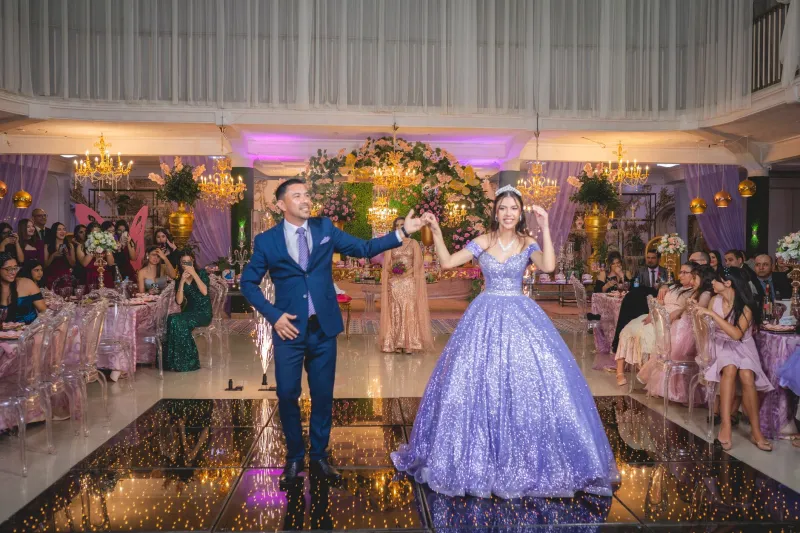
It would be a mistake to conclude that large events are inherently inferior to intimate ones. Scale carries its own power. The energy of a full room, the spectacle of a grand production, the sense of participating in something larger than oneself—these are genuine emotional goods that smaller gatherings cannot replicate.
The goal is not to disguise the scale. It is to honor it while refusing to let it absorb the individual. The finest large-format events accomplish precisely this: they offer guests the privilege of being part of something significant, without ever allowing them to feel lost within it.
Achieving that balance is not accidental. It is designed—carefully, deliberately, and with a detailed understanding of what human beings need to feel at their best in shared spaces.
The Design Commitment Behind the Guest Experience
At Quality Event Design, this challenge sits at the center of how we approach every large-scale project. The question is never simply how many guests will attend. It is how each of those guests will feel at the end of the evening—and what specific design decisions, made months in advance, will produce that feeling reliably.
Personalization at scale is not a luxury reserved for boutique gatherings. It is a discipline, and it is available to any event that approaches guest experience as a design problem worthy of serious, sustained attention.